Introduction
Artificial Intelligence, commonly known as AI, has become one of the most important technologies in the modern world. From smartphones and search engines to healthcare, businesses, and entertainment, AI is changing the way people live and work.
Many people hear the term Artificial Intelligence but do not fully understand what it means. Some think AI is only about robots, while others believe it is a technology that belongs only to large companies. In reality, AI is already part of our daily lives.
When you use voice assistants, get recommendations on streaming platforms, use translation tools, or interact with smart applications, you are already using AI-powered technology.
Artificial Intelligence allows computers and machines to perform tasks that normally require human intelligence. These tasks include learning from information, understanding language, recognizing images, solving problems, and making decisions.
In this beginner-friendly guide, we will explain what Artificial Intelligence is, how it works, its history, different types, real-life examples, benefits, challenges, and the future of this powerful technology.
Table of Contents
Table of Contents
- Introduction
- What Is Artificial Intelligence (AI)?
- Why Is Artificial Intelligence Important?
- History of Artificial Intelligence
- How Does Artificial Intelligence Work?
- What Is Machine Learning?
- Types of Machine Learning
- What Is Deep Learning?
- What Is Natural Language Processing (NLP)?
- Types of Artificial Intelligence
- Narrow AI (ANI)
- Artificial General Intelligence (AGI)
- Artificial Super Intelligence (ASI)
- Real-Life Examples of Artificial Intelligence
- Benefits of Artificial Intelligence
- Challenges and Risks of Artificial Intelligence
- The Future of Artificial Intelligence
- Frequently Asked Questions (FAQ)
- Conclusion
What Is Artificial Intelligence (AI)?
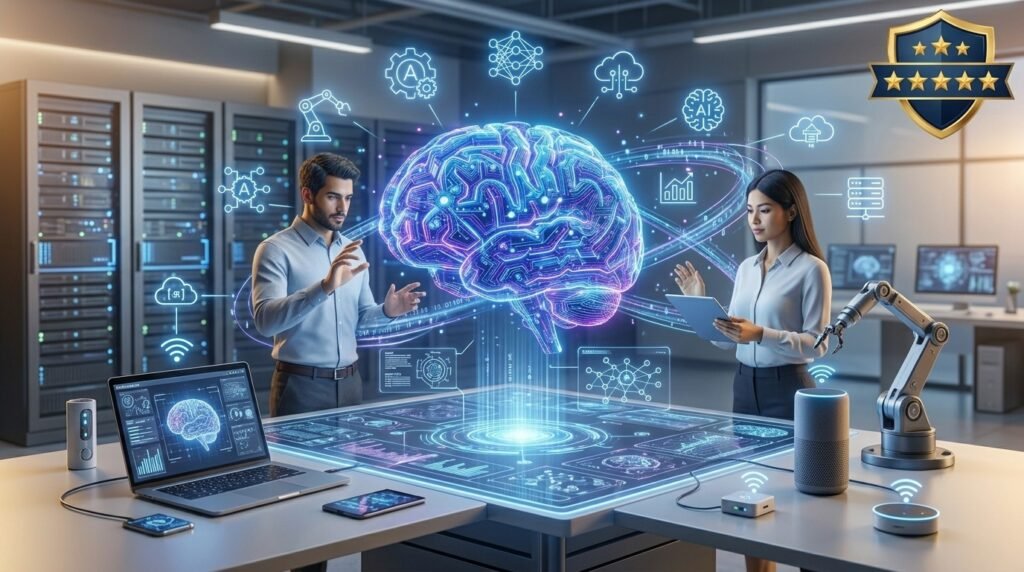
Artificial Intelligence is a branch of computer science that focuses on creating machines and software capable of performing tasks that usually require human intelligence.
Simply put, AI allows machines to think, learn, and make decisions in a way that is similar to human thinking.
Traditional computer programs follow fixed instructions written by developers. However, AI systems can analyze large amounts of data, identify patterns, and improve their performance over time.
For example:
- A normal calculator can only perform calculations based on commands.
- An AI system can analyze thousands of examples and learn how to recognize patterns or make predictions.
AI does not mean that machines have human emotions or consciousness. Instead, AI uses advanced algorithms, data, and computing power to complete specific tasks efficiently.
Why Is Artificial Intelligence Important?
Artificial Intelligence has become important because the amount of digital information in the world is growing rapidly. Humans cannot manually analyze all this information, but AI systems can process huge amounts of data within seconds.
Businesses use AI to:
- Improve customer service
- Automate repetitive tasks
- Analyze market trends
- Detect fraud
- Create personalized experiences
Scientists use AI to:
- Discover new medicines
- Study climate changes
- Analyze complex data
Individuals use AI for:
- Online searches
- Translation
- Personal assistants
- Content creation
- Learning new skills
The ability of AI to save time, reduce errors, and solve complex problems makes it one of the most valuable technologies today.
History of Artificial Intelligence
The idea of creating intelligent machines is not new. Humans have imagined artificial beings for centuries, but modern AI development began in the 20th century.
The Beginning of AI Research
In 1950, British mathematician and computer scientist Alan Turing introduced the idea of machine intelligence. He proposed a famous test called the “Turing Test” to determine whether a machine could demonstrate human-like intelligence.
In 1956, the term “Artificial Intelligence” was officially introduced during the Dartmouth Conference. Researchers began exploring ways to create machines that could solve problems and learn.
Early AI Development
During the 1960s and 1970s, scientists created early AI programs that could solve mathematical problems, play simple games, and understand basic language commands.
However, progress was limited because computers at that time lacked the processing power and data required for advanced AI.
The Rise of Machine Learning
In the 1990s and 2000s, AI started improving rapidly because computers became faster and more data became available.
Instead of programming every possible action, researchers developed machine learning methods that allowed computers to learn from examples.
This changed AI forever.
Modern Artificial Intelligence
Today, AI has entered almost every industry. Technologies such as deep learning, natural language processing, and computer vision allow machines to perform extremely advanced tasks.
Modern AI can:
- Understand human language
- Generate text and images
- Recognize faces
- Drive vehicles
- Assist doctors
- Predict future trends
Companies around the world are investing heavily in AI because it has the potential to transform almost every field.
How Does Artificial Intelligence Work?
Artificial Intelligence works by combining large amounts of data, powerful computer systems, and advanced algorithms. AI systems analyze information, find patterns, and use those patterns to make predictions or decisions.
Unlike traditional software that only follows fixed instructions, AI systems can learn from experience and improve their performance over time.
The basic process of AI works in four main steps:
1. Data Collection
Data is the foundation of Artificial Intelligence. AI systems need information to learn and improve.
This data can include:
- Text
- Images
- Videos
- Audio recordings
- Numbers
- User behavior
- Sensor information
For example, an AI system designed to recognize cats and dogs needs thousands or millions of example images before it can accurately identify them.
The more high-quality data an AI system receives, the better it can understand patterns and make accurate predictions.
2. Data Processing
After collecting data, AI systems process and organize that information.
Computers analyze the data to find important patterns and relationships.
For example:
A shopping website may analyze:
- What products users search for
- What items they purchase
- How long they view a product
The AI system then uses this information to recommend products that users may like.
3. Learning Through Algorithms
Algorithms are the rules and methods that allow AI systems to learn from data.
Machine learning algorithms help computers identify patterns without needing every instruction to be manually programmed.
For example:
A spam filter in your email learns from thousands of messages. Over time, it becomes better at identifying unwanted emails.
4. Making Decisions and Predictions
After learning from data, AI systems can provide results, predictions, or decisions.
Examples:
- A navigation app predicts the fastest route.
- A streaming platform recommends movies.
- A medical AI system helps detect diseases.
- A chatbot answers customer questions.
AI does not think exactly like humans. Instead, it uses mathematical models and patterns from data to produce useful results.
What Is Machine Learning?
Machine Learning (ML) is one of the most important parts of Artificial Intelligence.
Machine Learning allows computers to learn from data without being directly programmed for every single task.
Instead of telling a computer every possible answer, developers provide examples and allow the system to discover patterns.
For example:
Traditional programming:
Rules + Data = ResultMachine Learning:
Data + Results = Learn RulesTypes of Machine Learning
There are three major types of machine learning:
1. Supervised Learning
Supervised learning uses labeled data to train AI models.
The system learns by comparing examples with correct answers.
Examples:
- Email spam detection
- Image recognition
- Weather prediction
- House price prediction
Example:
If an AI model receives thousands of pictures labeled “cat” and “dog,” it learns the differences between them and can identify new images.
2. Unsupervised Learning
Unsupervised learning works with data that does not have labels.
The AI system finds hidden patterns and groups information by itself.
Examples:
- Customer behavior analysis
- Market research
- Finding similar users
- Detecting unusual activity
For example, an online store may use unsupervised learning to group customers based on shopping habits.
3. Reinforcement Learning
Reinforcement learning allows AI systems to learn through trial and error.
The system receives rewards for correct actions and penalties for incorrect actions.
Examples:
- AI playing video games
- Robots learning movements
- Self-driving vehicle systems
This method helps AI improve by learning from its own experiences.
What Is Deep Learning?
Deep Learning is an advanced branch of Machine Learning that uses artificial neural networks.
These networks are inspired by the way the human brain works.
Deep learning systems contain multiple layers that help computers understand complex information.
Deep Learning is used in:
- Image recognition
- Voice recognition
- Language translation
- AI content generation
- Autonomous vehicles
Examples of deep learning applications:
- Face recognition on smartphones
- Voice assistants understanding commands
- AI tools generating images and text
What Is Natural Language Processing (NLP)?
Natural Language Processing, also called NLP, is a technology that allows computers to understand and communicate using human language.
NLP helps machines understand:
- Written text
- Spoken words
- Different languages
- Human questions
Examples:
- AI chatbots
- Translation apps
- Voice assistants
- Search engines
When you ask a question to an AI assistant, NLP helps the system understand your words and provide a useful response.
Types of Artificial Intelligence
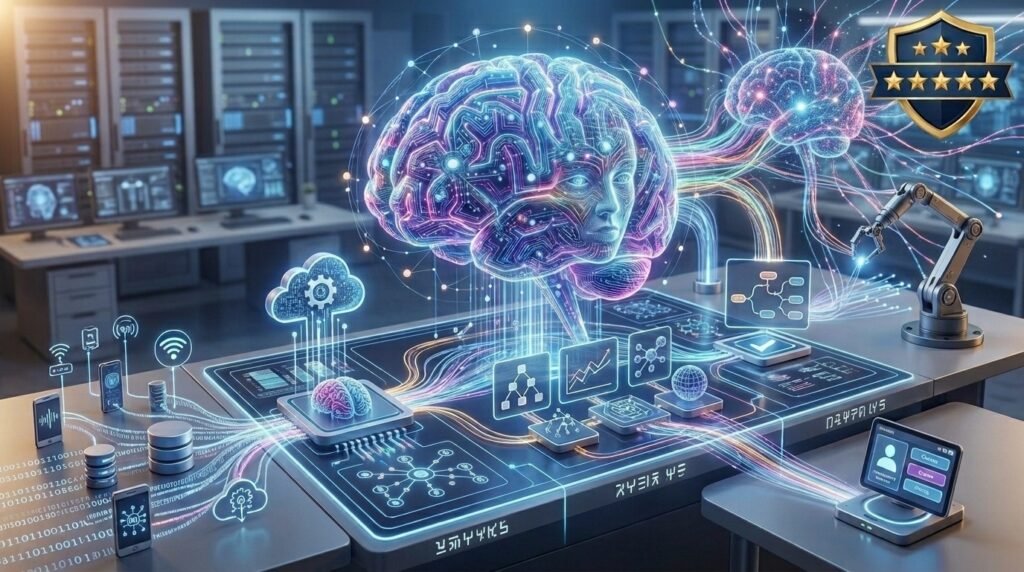
Artificial Intelligence is commonly divided into three main categories:
1. Narrow Artificial Intelligence (ANI)
Narrow AI is the type of AI we use today.
It is designed to perform a specific task or limited range of tasks.
Examples:
- Google Search
- Voice assistants
- Recommendation systems
- Image recognition
- Chatbots
Narrow AI can perform specific tasks extremely well, but it does not have general human intelligence.
2. Artificial General Intelligence (AGI)
Artificial General Intelligence refers to AI systems that would have human-level intelligence.
An AGI system would theoretically be able to:
- Learn any subject
- Solve different types of problems
- Understand situations like humans
Currently, AGI does not exist. Researchers are still exploring how to create more advanced AI systems.
3. Artificial Super Intelligence (ASI)
Artificial Super Intelligence refers to a hypothetical future AI that could surpass human intelligence in almost every area.
It could potentially perform tasks better than humans, including:
- Scientific research
- Problem solving
- Creativity
- Decision making
ASI remains a theoretical concept and does not currently exist.
Real-Life Examples of Artificial Intelligence
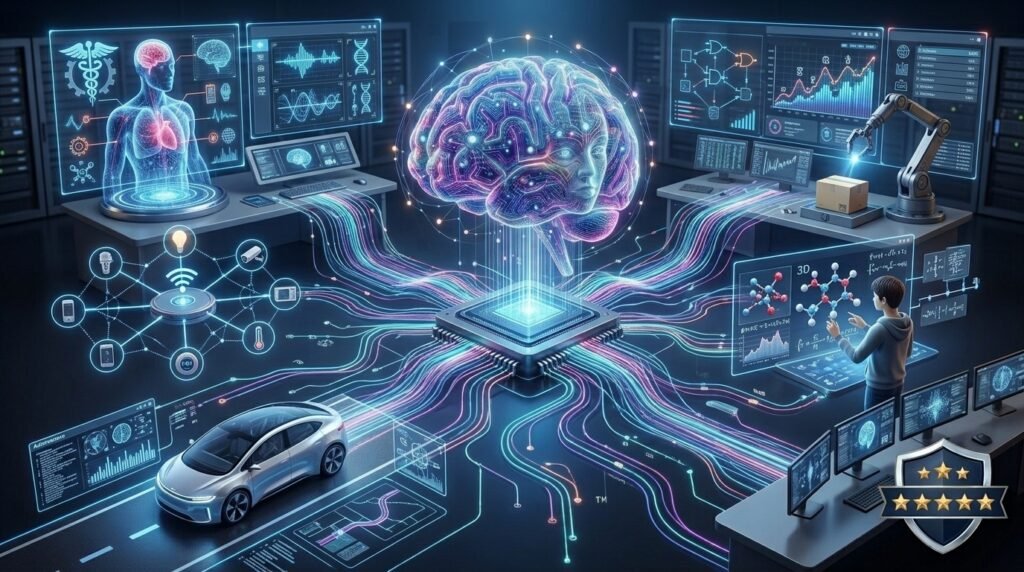
Artificial Intelligence is no longer just a concept from science fiction. It is already being used in millions of applications around the world. Many people use AI every day without even realizing it.
Let’s explore some common examples of AI in real life.
1. AI in Search Engines
Search engines use Artificial Intelligence to understand what users are searching for and provide the most relevant results.
AI helps search engines:
- Understand search intent
- Identify useful content
- Improve search accuracy
- Remove spam results
For example, when you search for a question, AI analyzes your words and tries to understand what information you actually need.
2. AI Voice Assistants
Voice assistants are one of the most common examples of AI technology.
Examples include:
- Smartphone assistants
- Smart speakers
- Voice-controlled devices
These systems use Natural Language Processing to understand human speech and respond to commands.
They can help users:
- Set reminders
- Search information
- Control smart devices
- Send messages
- Play music
3. AI in Social Media
Social media platforms use AI algorithms to personalize user experiences.
AI helps platforms:
- Recommend content
- Detect harmful activity
- Suggest friends
- Improve advertisements
- Analyze user interests
For example, when a platform shows videos or posts that match your interests, AI is usually working behind the scenes.
4. AI in Healthcare
Healthcare is one of the industries where AI has created major improvements.
AI helps doctors and researchers with:
- Disease detection
- Medical image analysis
- Drug research
- Patient monitoring
- Healthcare predictions
For example, AI systems can analyze medical images and help doctors identify possible health issues faster.
AI does not replace doctors, but it can provide valuable support and improve decision-making.
5. AI in Business
Companies use AI to improve efficiency and provide better services.
Businesses use AI for:
- Customer support chatbots
- Sales predictions
- Data analysis
- Marketing automation
- Fraud detection
AI allows companies to save time and make better decisions using data.
6. AI in Education
Artificial Intelligence is also changing the education sector.
AI-powered tools help students and teachers by providing:
- Personalized learning
- Language assistance
- Automated grading
- Research support
- Learning recommendations
Every student can learn differently, and AI can help create customized learning experiences.
7. AI in Transportation
Transportation systems are becoming smarter with AI.
AI is used in:
- Navigation apps
- Traffic management
- Driver assistance systems
- Autonomous vehicles
AI analyzes road conditions, traffic data, and vehicle information to improve safety and efficiency.
Benefits of Artificial Intelligence
Artificial Intelligence provides many advantages for individuals, businesses, and society.
1. Saves Time and Increases Productivity
AI can complete repetitive tasks quickly and accurately.
Examples:
- Automating customer responses
- Organizing information
- Analyzing large amounts of data
This allows people to focus on more important and creative tasks.
2. Reduces Human Errors
Humans can make mistakes, especially when performing repetitive tasks.
AI systems can process information consistently and reduce errors in many areas.
Examples:
- Data analysis
- Quality control
- Calculations
- Pattern recognition
3. Faster Decision Making
AI can analyze huge amounts of information within seconds.
Businesses use AI insights to make better decisions about:
- Customers
- Marketing
- Finance
- Operations
4. Works 24/7
Unlike humans, AI systems can operate continuously without breaks.
Examples:
- Customer service chatbots
- Security monitoring systems
- Automated services
This makes AI useful for organizations that need constant support.
5. Improves User Experience
Many companies use AI to create personalized experiences.
Examples:
- Product recommendations
- Personalized content
- Smart assistants
AI helps services understand user needs and provide better solutions.
Challenges and Risks of Artificial Intelligence
Although AI provides many benefits, it also creates challenges that need careful consideration.
1. Privacy Concerns
AI systems often require large amounts of data to work effectively.
This creates concerns about:
- Personal information collection
- Data security
- User privacy
Organizations must handle data responsibly to protect users.
2. Job Changes
AI automation may change the way some jobs are performed.
Some repetitive tasks may become automated, while new jobs related to AI development and management may grow.
The future will likely require people to learn new skills and adapt to changing technology.
3. AI Bias
AI systems learn from existing data. If the data contains mistakes or unfair patterns, AI may produce biased results.
Developers need to create AI systems that are:
- Fair
- Transparent
- Responsible
4. Security Risks
AI can also be misused for harmful purposes.
Possible risks include:
- Fake content creation
- Online scams
- Cybersecurity threats
Strong security measures and responsible AI development are important.
The Future of Artificial Intelligence
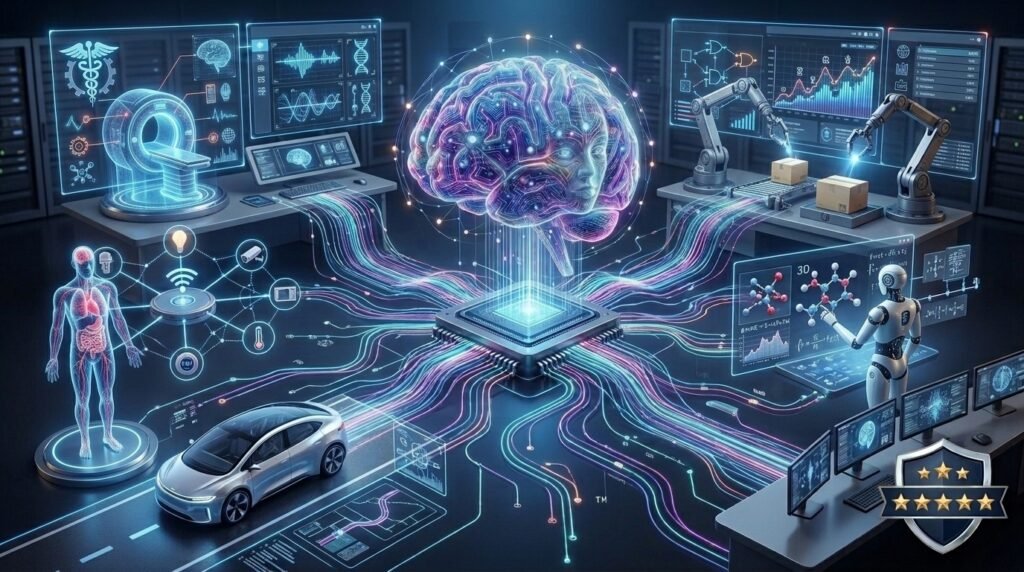
Artificial Intelligence will continue to develop and become more powerful in the coming years.
Future AI technologies may improve:
- Healthcare
- Education
- Scientific research
- Business operations
- Personal productivity
AI tools will likely become more common and integrated into everyday life.
However, the future of AI depends on responsible development. Technology should be designed to help humans, improve society, and solve important problems.
The goal of AI is not to replace humans completely but to work together with people and enhance human abilities.
Frequently Asked Questions (FAQ)
What is Artificial Intelligence in simple words?
Artificial Intelligence is a technology that allows computers and machines to perform tasks that normally require human intelligence, such as learning, problem-solving, and understanding language.
Is AI replacing humans?
AI is changing many jobs, but it is not simply replacing humans. In many areas, AI works as a tool that helps people become more productive and efficient.
What are examples of Artificial Intelligence?
Common examples include:
- Chatbots
- Voice assistants
- Search engines
- Recommendation systems
- Image recognition
- Translation tools
What is the difference between AI and Machine Learning?
AI is the broader concept of creating intelligent machines, while Machine Learning is a method that allows computers to learn from data.
Is Artificial Intelligence dangerous?
AI itself is a technology. The impact depends on how people develop and use it. Responsible use and proper security are important.
Conclusion
Artificial Intelligence is one of the most transformative technologies of our time. From smartphones and businesses to healthcare and education, AI is changing how people work, learn, and communicate.
Understanding AI is becoming increasingly important because this technology will continue to influence the future.
Whether you are a student, business owner, developer, or simply someone interested in technology, learning about Artificial Intelligence can help you prepare for the opportunities ahead.
AI is not just the future — it is already a part of our present world.